

How to Manage Creative Fatigue
Creative fatigue is not just a creative problem, it is a media, audience, and performance challenge. When the same message is repeatedly served to the same audience, its ability to capture attention and motivate action can diminish. Left unmanaged, creative fatigue can contribute to declining engagement, rising media costs, weaker conversion rates, and ultimately a less effective connection between a brand and its audience.
The solution is not to constantly reinvent a brand or abandon creative that is working. Instead, high-performing brands take a strategic approach to creative management—using testing, audience insights, performance data, and proactive planning to evolve creative before fatigue significantly impacts results.
Here are five strategies brands can use to stay ahead.
Build a Structured Creative Testing Framework
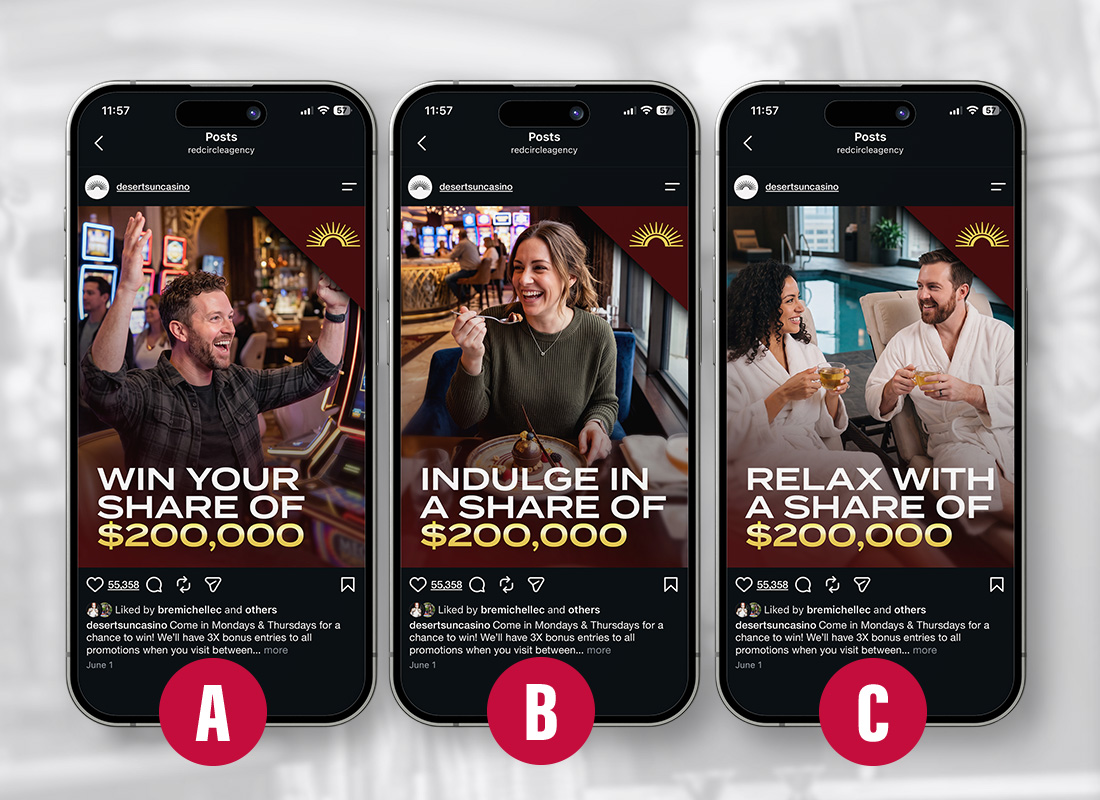
One of the most effective ways to manage creative fatigue is to stop treating each campaign as a single creative execution. A strong campaign should be built around one clear, ownable idea—but that idea shouldn't depend on a single execution. Develop a thoughtful family of creative expressions that allows you to test how the idea connects with audiences without diluting what makes the campaign distinctive.
Testing can include:
- Different hooks: Test the opening statement, headline, question, or visual moment designed to capture attention.
- Messaging angles: Explore different consumer benefits, emotional triggers, product attributes, or reasons to believe.
- Visual styles: Test executional approaches within an established creative platform.
- Formats: Test short-form video, static, carousel, Stories, Reels, display, audio, and other platform-specific formats.
- Value propositions: Determine which benefits or offers create the strongest response from different audiences.
The objective is not simply to identify a winning ad. It is to understand why certain creative resonates so that those insights can inform the next generation of creative.
A structured testing framework also creates a natural pipeline of replacement creative. Rather than waiting until an ad is underperforming and then scrambling for a solution, marketers can identify the next high performing variation and transition audiences before performance drops significantly.
Rotate Creative
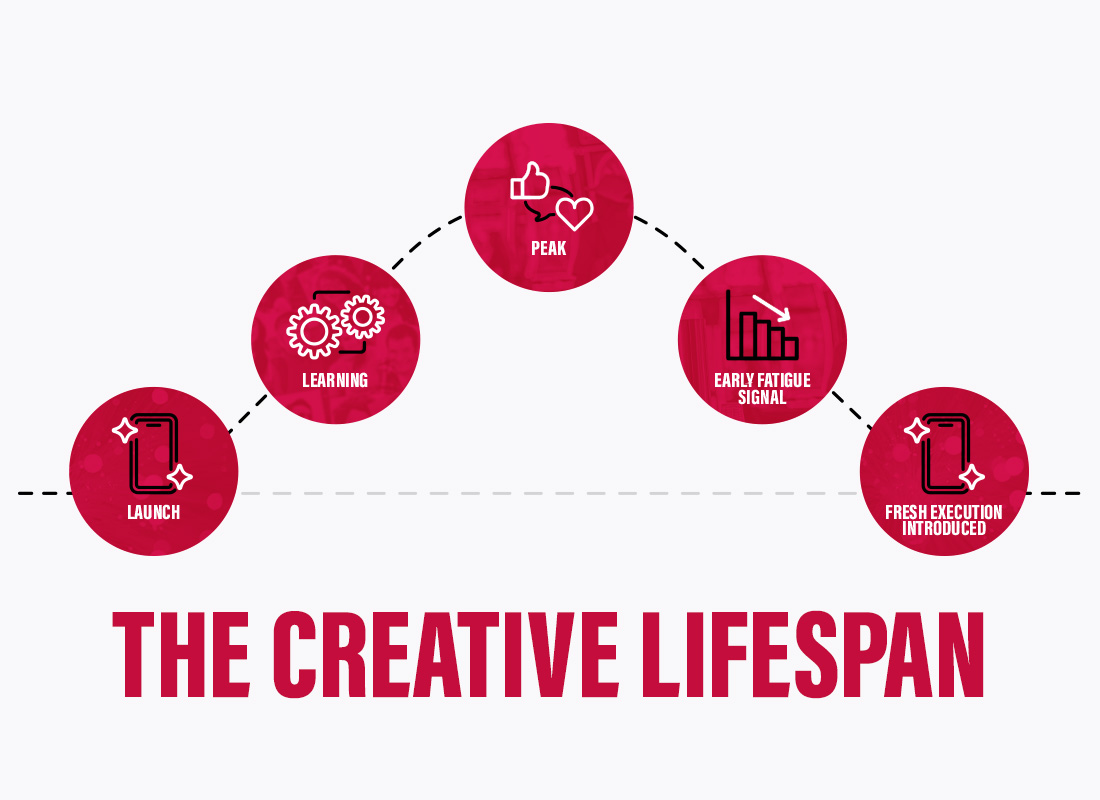
One of the most common mistakes brands make is waiting for performance to deteriorate before refreshing creative.
By the time an ad shows significant declines in click-through rates, engagement, conversions, or other key performance indicators, fatigue may already be established. The audience has seen the message too many times, and the opportunity to capture additional value from that creative may have passed.
Instead, brands should establish proactive creative refresh strategies based on historical performance and audience behavior.
Consider factors such as:
- Audience size: Smaller audiences can experience fatigue more quickly because the same individuals are exposed to the message more frequently.
- Average frequency: Increasing frequency can be an early indicator that an audience is approaching creative saturation.
- Campaign duration: Longer campaigns require greater creative variation to maintain attention.
- Platform behavior: Each platform has its own consumption patterns, algorithms, and creative expectations.
- Historical performance: Previous campaigns can reveal how quickly engagement or conversion metrics tend to decline.
- Seasonality: Certain audiences may respond differently as consumer needs, behaviors, and competitive messaging change.
Proactive rotation does not mean automatically replacing every ad on a predetermined schedule. It means using performance signals to anticipate when a creative refresh may be necessary.
The goal is to refresh before the audience tunes out, not after performance has already fallen off.
Balance Brand and Performance Messaging

Creative fatigue can accelerate when every ad asks the audience to do the same thing: click, buy, book, sign up, or convert.
Direct response messaging is essential, but a media strategy built entirely around immediate action can become predictable. When consumers repeatedly encounter similar promotional messages, they may begin to tune them out.
A more sustainable approach balances performance messaging with brand-building creative.
Incorporating:
- Brand storytelling
- Educational content
- Customer experiences
- Entertainment
- Emotional narratives
- Product demonstrations
- Lifestyle content
- Social proof
- Differentiation messaging
can create greater variety in the consumer experience while reinforcing the broader brand proposition.
This variety can refresh how consumers perceive the brand rather than simply changing the visual appearance of an advertisement.
Brand and performance should not be in competition. Brand building can create the familiarity and preference that make performance messaging more effective, while performance data can reveal which brand messages are most likely to drive action.
The strongest strategies allow both sides to reinforce one another.
Let Data Inform the Creative Without Letting It Dictate It
Data should play a central role in creative decision making, but marketers need to be careful not to turn successful historical performance into a creative formula that gets repeated indefinitely.
A common trap is finding a creative execution that performs well and then producing increasingly similar versions of it. While this can create short term consistency, it can also accelerate audience saturation.
Instead, performance data should be used to uncover creative insights.
Look at:
- Stability of KPIs: Is performance holding steady, improving, or beginning to decline?
- Frequency and engagement: Are audiences seeing the message repeatedly without taking action?
- Messaging resonance: Which benefits, themes, or emotional appeals are generating the strongest response?
- Audience differences: Are certain segments responding differently to the same creative?
- Conversion behavior: Is engagement translating into meaningful actions?
- Creative level trends: Which elements consistently appear in high performing executions?
The key is to understand the underlying reason a creative works.
If a particular message performs well because it communicates convenience, the next creative does not necessarily need to repeat the exact same headline or visual. Instead, marketers can explore new ways to communicate convenience.
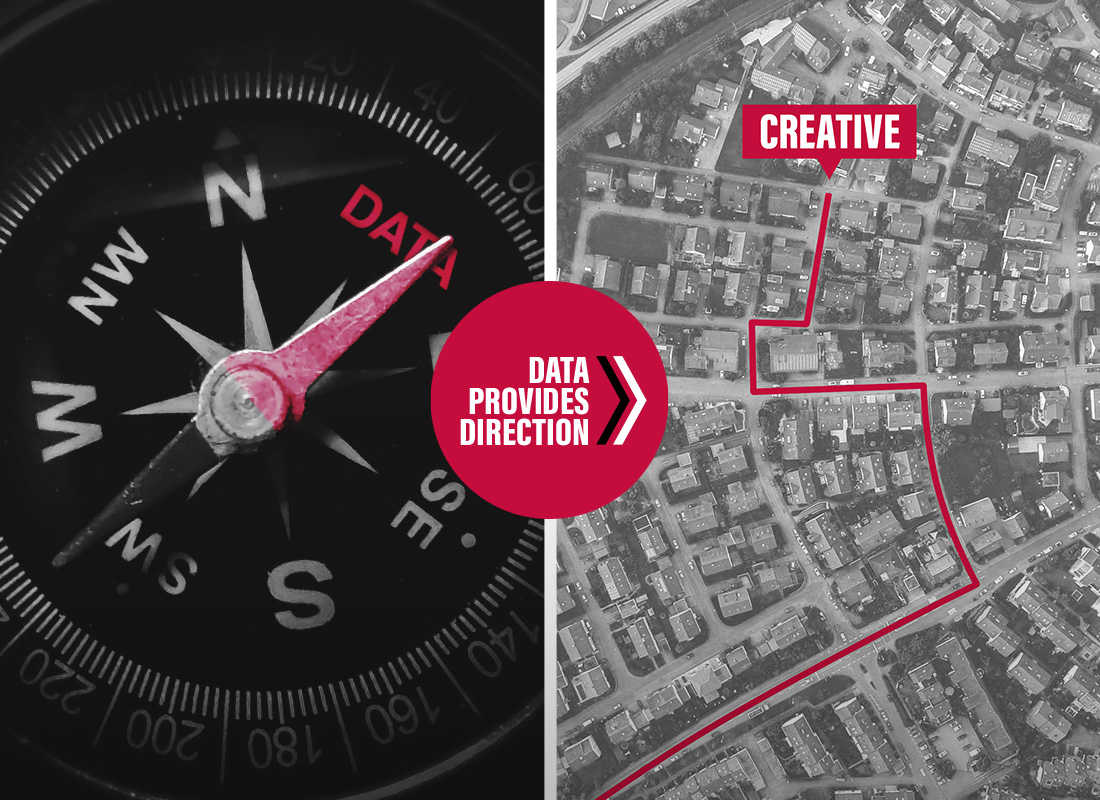
Data should provide the direction. Creative should determine the destination.
This distinction allows brands to learn from performance without becoming trapped by it.
Creative Fatigue Requires an Ongoing Management Strategy
Managing creative fatigue is ultimately about creating a sustainable relationship between creative, audience, media, and data.
Brands that consistently perform at a high level do not wait for declining results to tell them that something needs to change. They establish systems that identify potential fatigue, continuously test new ideas, segment audiences intelligently, and use performance insights to inform the next creative variant.
Most importantly, they recognize that creative optimization is not a onetime exercise. Consumer expectations change. Platforms change. Competitive environments change. And audiences change.
That means the creative strategy must change with them.
Final Thoughts
Creative fatigue is inevitable, but it is manageable.
The objective is not to eliminate fatigue entirely or constantly replace creative simply for the sake of having something new. The objective is to recognize when an audience is becoming less responsive and have the strategy, insights, and creative pipeline in place to respond before performance is significantly impacted.
By building a structured testing framework, rotating creative proactively, segmenting messaging by audience and funnel stage, balancing brand and performance, and allowing data to inform, not dictate, creative decisions, brands can extend the life of their media investments while maintaining relevance and impact.
The brands that win are not necessarily the ones with the most creative. They are the ones that know when, where, and why to change it. Creative fatigue doesn't have to be a performance cliff. With the right strategy, it can become an opportunity to learn, evolve, and build stronger connections with audiences over time.
